
Environmental Storytelling
What Video Games Teach Writers

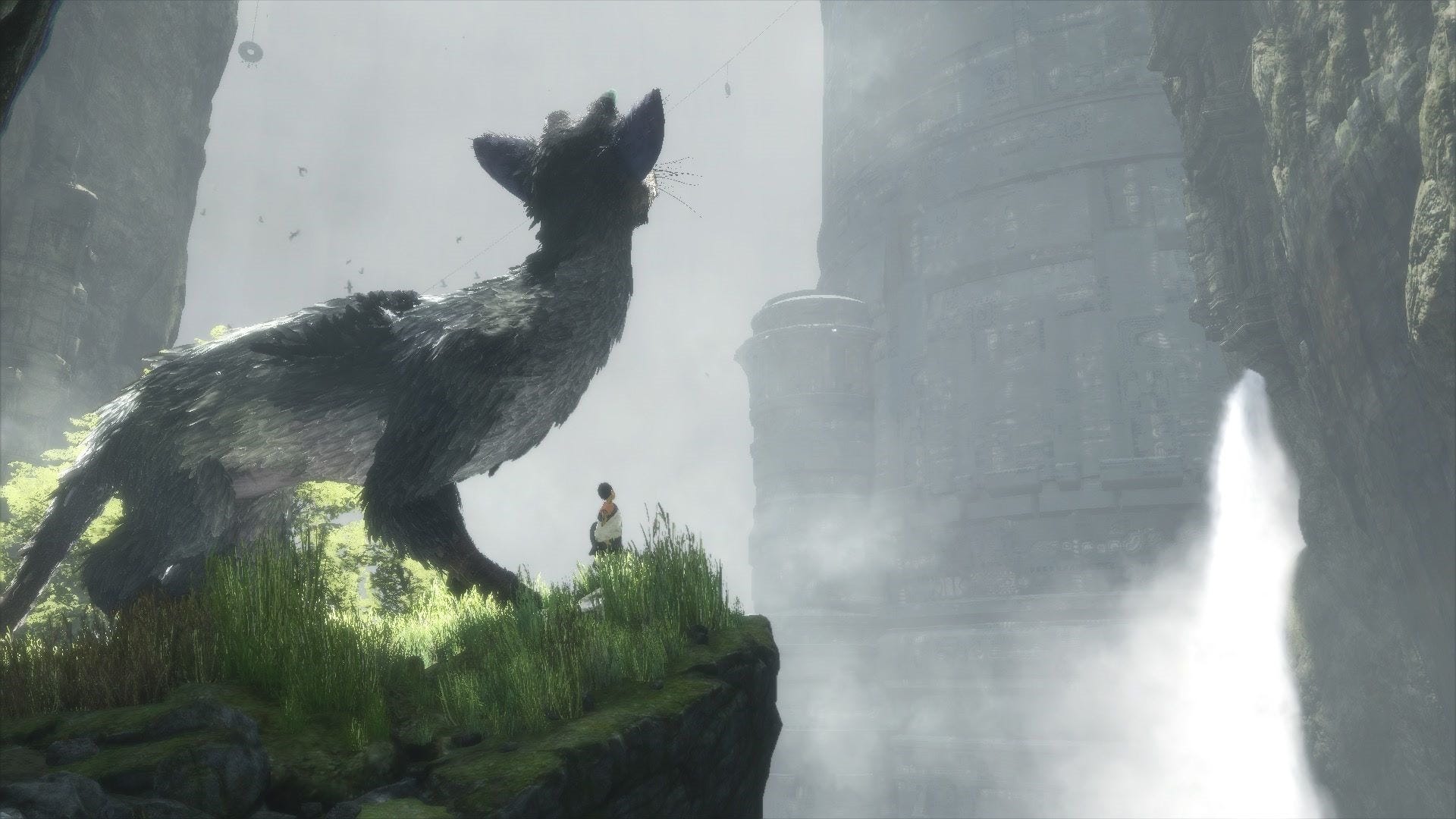
One dark winter evening in 2018, a 13-year-old me fired up The Last Guardian for the very first time. Within the first couple of notes and visual beats, I was transported to a different world — a world far away from the free-fall that was real life. For me, a girl who had grown up an outsider, seemingly existing on a plane different from everybody else, that feeling of belonging and nostalgia was invaluable. It was a world without words. Without noise. A silent journey across a ruined land, brimming with atmosphere, beauty, and meaning. The game told me nothing about why I was here, what happened, and how it had all ended — but it didn’t need to. The world spoke for itself.
I believe I knew inwardly, even then, that I’d never need to chase the feeling of being seen or understood again, because I had found my home in the realm of fiction. Not as an escape, but as a way of understanding the bigger picture; how to embrace solitude and the beauty of walking my path alone.
Perhaps most importantly, this game, and many others like it, have taught me the importance of environmental storytelling in art.
This is the April edition of Journeys to Other Worlds, and this time, we’re pivoting to the realm of 3D, and what we can learn as writers from video games.
Why Games are Master Teachers
It goes without saying that video games force environmental storytelling sheerly due to its form: players must be incentivised to explore and interact with the world around them, and there is little reliance on paragraphs of text to convey world-building. There are a myriad of other factors within gaming, especially RPG/open-world games, to take into account — music and sound design, ambience, style, mechanics, and so on… all of these things come together to create ludonarrative harmony; the gameplay and story align through the environment, thus creating a unified, seamless experience. A lot of these things are obviously not replicable in writing, but I believe we can, nevertheless, learn from the games that utilise this harmony in a most elegant way, to create worlds that feel lived in and riddled with history.
As a writer, one of my biggest challenges has always been the balancing act of exposition and trusting in my readers — knowing what details reveal more than literal explanations, and when to incentivise exploration and speculation. This fine line often straddles the two opposites of frustration and reward; too vague, and we become disinterested. Too much, and we don’t feel rewarded for coming up with answers on our own.
In past letters, I’ve gone over my process of crafting a scene, and how I show rather than tell, allowing readers to piece together the story through carefully revealed information about the environment. I spoke about how to breathe life into the inanimate and make your world feel lived in, not just existing as a moment in time, but a culmination of the past. Now, I’m reflecting over how my favourite games helped shape this sense of atmosphere and world-building, and how you can be more thoughtful in taking inspiration from these masterfully created worlds.
Case Studies
Architecture and History (Nier: Automata and Shadow of the Colossus)
Nier: Automata: Ruins as Palimpsest
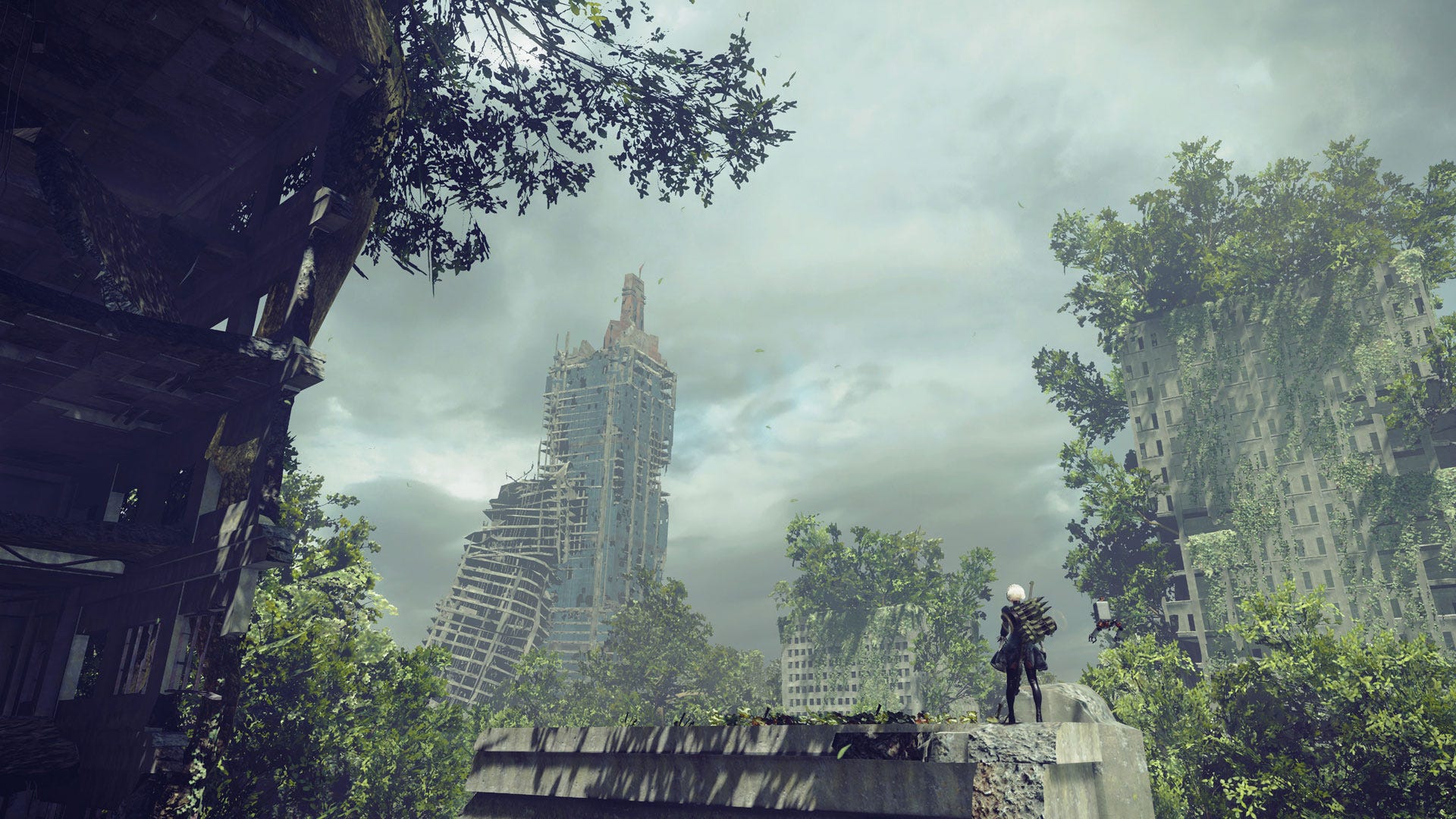
The Nier series, and especially Nier: Automata, holds a special place in my heart for being one of the first videogames to introduce me to philosophy and the human condition. The environment perfectly embodies its profound exploration of these things, with every area, from the ruined city to the amusement park, posing a different take on the core theme: what does it mean to be human?
When you step into the ruined city for the first time, you are greeted with an eerie sort of serenity — nature has overtaken concrete in the absence of humans, and a haunting beauty clings to what has been left behind. You, the android soldier, don’t belong here: you stand out starkly amidst the rust and foliage, reminding you that what you are fighting for is no longer here. Androids have settled in the ruins, and other machine lifeforms create new cultures in the wreckage, but it is all a mere imitation of humanity — a ghostly presence. Very little about the story is revealed through exposition, and it is up to you, the player, to piece together what has happened.
This game taught me that places hold multiple timelines, and don’t just exist for the sake of decoration or flair: they are essential to building a believable world that speaks for itself.
Shadow of the Colossus: Ruins and Negative Space
Shadow of the Colossus (2018) is yet another example of how setting can be used to convey time and history, aligning itself closely with games like The Last Guardian and Ico. With almost no dialogue or context, the game presents a simple task: defeat 16 colossi — no dramatic introductions or context, and yet, the player understands that there is something foreboding about this deal. The landscape is vast, empty, and de-saturated, the very picture of abandonment, exemplifying the cursed nature of your quest: there is nothing truly heroic about your actions as you take down beast after beast. In contrast to The Last Guardian, there is no abundance here, and the few ruins that do pepper the deserted land often point towards religious sites rather than once-operating settlements. The Shrine of Worship, where you return after every fight, stands as a stark bastion amidst the emptiness, acting as the ultimate anchor point of your journey, but even then, it is just as cold and austere as the rest of the world. Everything from the structures to the colossi are an everlasting reminder of your insignificance — you are overshadowed by the sheer scale of your surroundings.
We are invited to wonder about who once lived here, where the colossi came from, and what the consequences of our actions truly are, all communicated through world building rather than exposition. It taught me that sometimes, less is more, and simply suggesting the whole instead of deliberately explaining it is far more impactful.
The key is intentionality. Dense or sparse, your environmental details must serve the story.
![Screenshot] Shadow of the Colossus really knows how to make you feel puny - and I loved every minute of it. : r/PS4](https://substackcdn.com/image/fetch/$s_!hSMT!,f_auto,q_auto:good,fl_progressive:steep/https%3A%2F%2Fsubstack-post-media.s3.amazonaws.com%2Fpublic%2Fimages%2F06dccb36-2eeb-4f2b-b3f9-12aa38a719da_3840x2160.jpeg "Screenshot] Shadow of the Colossus really knows how to make you feel puny - and I loved every minute of it. : r/PS4")
Atmosphere as Narrative (ABZÛ and Sky: Children of the LIGHT)
ABZÛ: Underwater Ruins and Meditation
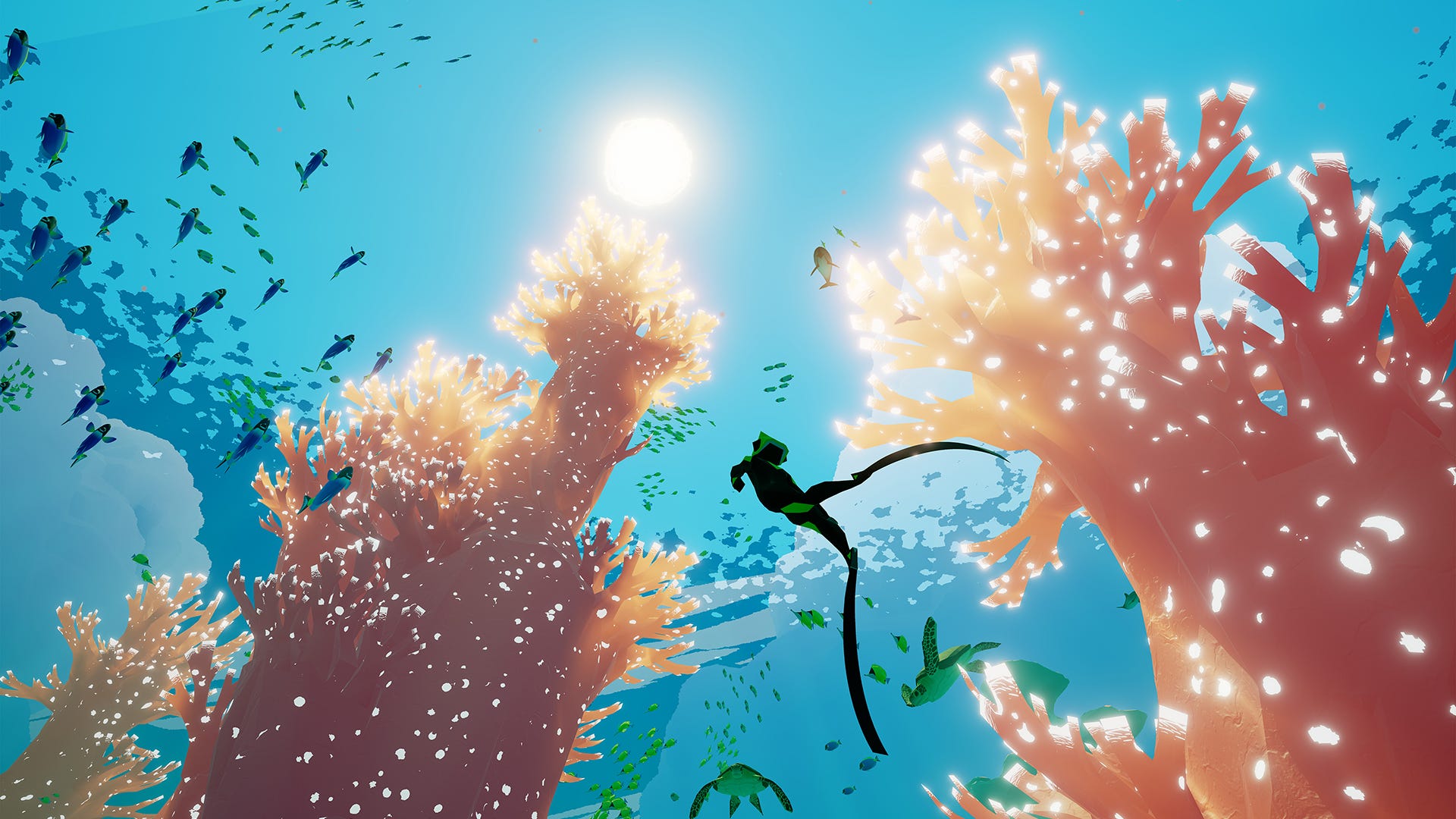
ABZÛ (2017) is a strong pivot from the previous two examples, yet I included it because it successfully achieves the same feat of conveying a world through visual language alone. It evidently sets itself aside from the bleakness of Shadow of the Colossus or melancholy of The Last Guardian, instead embodying a vibrant setting brimming with colour and life. Here, the palette alone tells a compelling story, with rich shades of blue and splashes of bright corals enveloping the player as they explore underwater ruins, gradually restoring the life and vibrancy to each area. As you dive deeper, the world, too, becomes more riddled with technology and darkness, conveying the conflict through environment and palette. The storytelling quite literally unfolds vertically — you go back in time as you descend, and hope becomes increasingly more difficult to enact as the world visually falls apart around you.
ABZÛ was a key experience in developing my novel City of Cyne, as I grew enamoured with the idea of underwater exploration and realised that few fantasy/dystopian novels fully took advantage of their setting to this extent. When describing the submerged sections of the Old City, I think about this: what does the quality of light through water tell us? What does colour shift communicate about depth, time, and danger?
This game also masterfully showcases that character arcs can also be communicated through environment. As the story grows more tense and serious, so too should the atmosphere — which, sometimes, can make a reader feel more as opposed to simply being told to feel it.
Sky: Children of the Light: Ruins and the Spiritual Journey
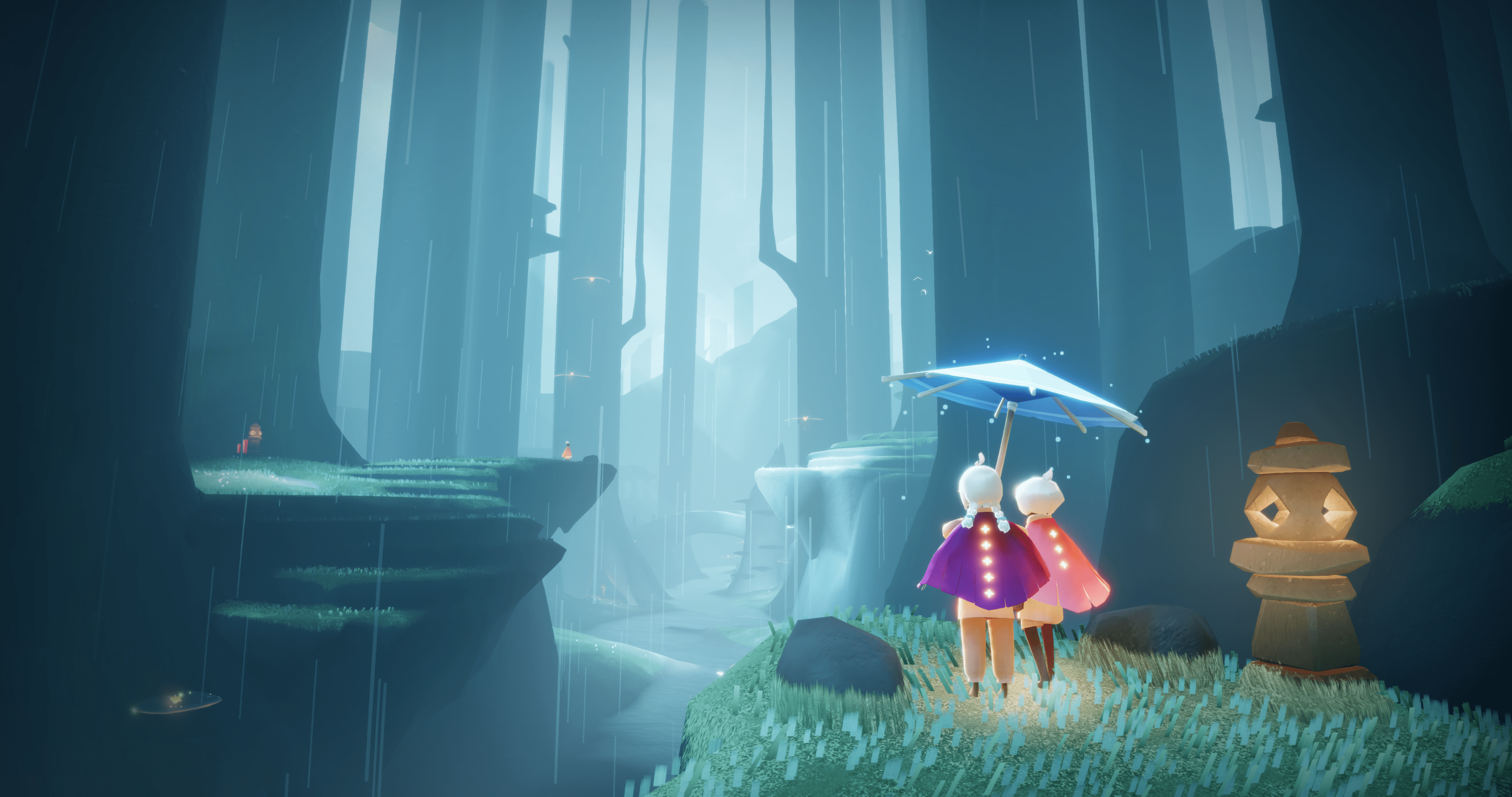
Sky: Children of the Light is a relatively new game compared to the previously mentioned, and, critically, is multiplayer. I decided to include it because of what it taught me about subtle world building and atmosphere, as, in a narrative sense, it has a similar feel to ABZÛ and fully embodies a minimalistic style of storytelling. Most importantly, it is an excellent lesson on the identity of places, and how they set themselves aside visually and thematically. Light is, quite literally, the driving force and substance of life — you, the player, are light. The only antagonist in this game is darkness, and finding a stray candle amidst a sea of isolation and destruction can often be your only salvation. Sky, once again, poses interesting questions similar to the aforementioned games: what was the purpose of the colossal shrines and buildings strewn across the realms, why were the realms created, and what is our destination really? The game subtly reveals all of these things through its environment, never quite the central focus, but always there for curious players.
Each realm represents a different aspect of civilisation, furthering the emotional journey of the player. The forest is abundant with growth and community, whereas the wasteland embodies the traces of war and desecration — every location teaches you something through exploration.
The game also shows how characters can leave traces in environments. Fyra isn’t the first to explore the ruins in City of Cyne; there should be evidence of others. Paths worn through rubble. Warnings scrawled on walls. This makes the world feel lived-in, even when empty. Both Sky and ABZÛ use minimal text but maximum atmosphere. ABZÛ tells its story through color and vertical space. Sky tells its through thematic zones and light mechanics. All that to say, what does your atmosphere say about the tone and mood of your story? How do your sensory choices serve your theme?
Discovery as Gameplay (The Last Guardian and Submerged)
The Last Guardian: Architecture as Antagonist
The world design of The Last Guardian is, to me, a shining example of just how much can be told through environment. Even when omitting the music, characters, and sound design, the world stands solidly on its own, exemplifying a haunting beauty in its juxtaposition of calm yet crumbling atmosphere. The player and Trico venture through the Nest, an enormous, abandoned fortress, with cages, chains, and narrow passages around every corner — the very picture of a prison, and yet, painted in a golden, melancholic light. Visually similar to Shadow of the Colossus, it captures the beauty of nostalgia, history, and emptiness, all the while slowly trickling information to the player through its architecture. The Nest isn’t simply where the story unfolds, it is the story — and you are just passengers in its endless expanse, climbing to your freedom.
Throughout City of Cyne, when designing the Old City's more dangerous sections, I think about how the architecture itself resists Fyra. Unstable floors that might collapse and flooded lower levels. Spaces designed to keep people out (or in). The ruins aren't neutral, they have agency, and that is what makes the spaces of Cyne feel alive.
Submerged: Pure Exploration
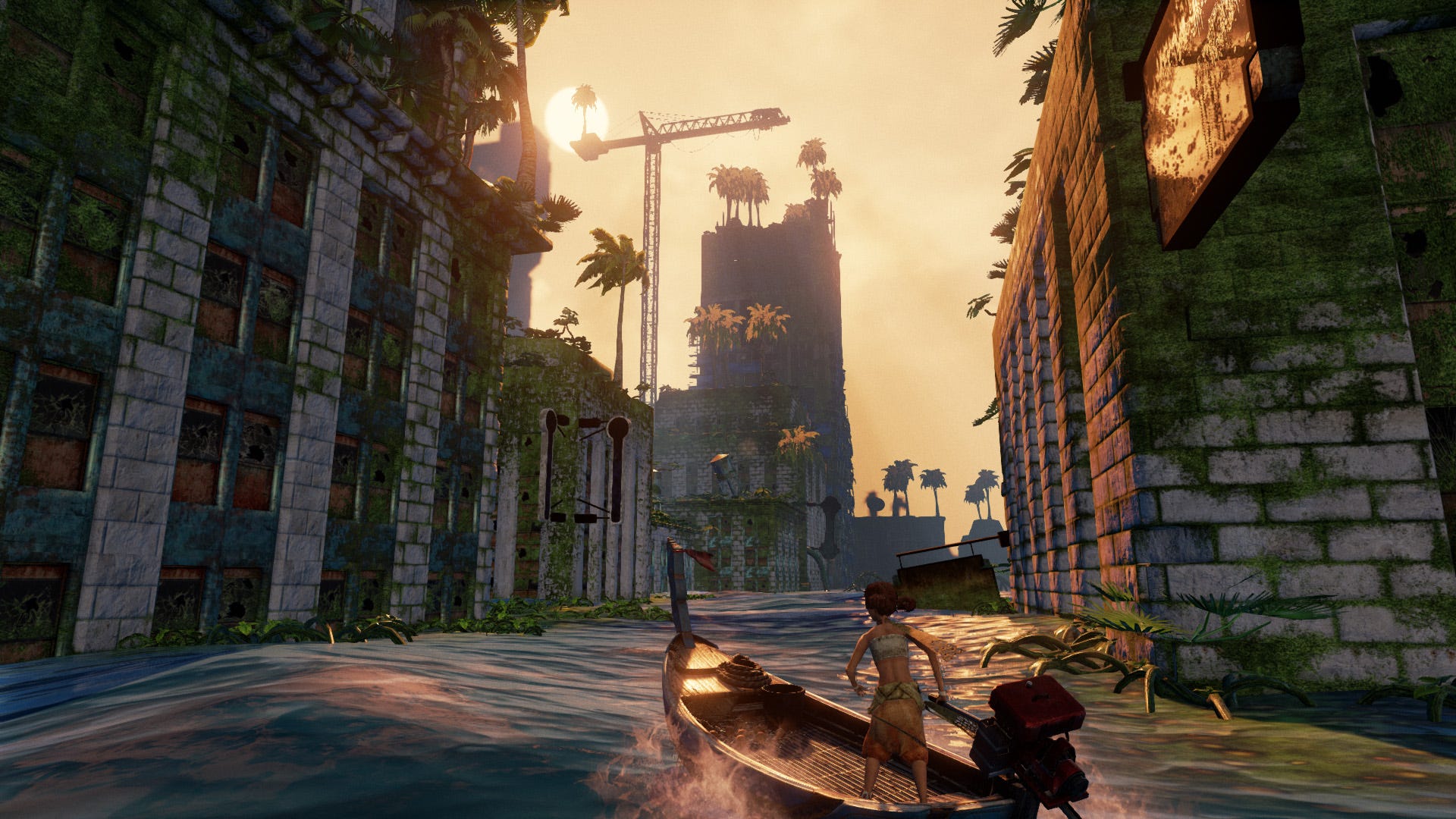
The sunken world of Submerged (2015) is heavily remnant of the exploration in The Last Guardian. A girl arrives by boat with her sick brother and must search for supplies amidst the ruins of a modern city, scaling rusty cranes and abandoned apartment complexes. No enemies, no combat — height is your only true objective, and the story is told entirely through the inanimate: hospitals, markets, decay patterns, and objects.
Submerged is the purest example of environmental storytelling I’ve played. There’s literally nothing else, just you, ruins, and what you can piece together. This taught me that tension doesn’t necessarily have to come from literal conflict. Sometimes, a character just exploring and discovering is enough. Fyra’s “down” moments, mapping the Old City or simply standing and observing, are as important as moments of danger. Let readers breathe. Let them explore. Let them feel your story.
From Game to Prose and its Limits
Most fantasy writers I know are innately attracted to world-focused games simply because of their explorative nature, giving the players agency and choice, and this is how I found my own way to it. Throughout my writing journey, I’ve had to learn how to break down my inspirations and articulate why I enjoy certain things and why I want to include them — which has only served to make me a more intentional writer, using my sentences wisely and pouring meaning into every word.
There are evidently a lot of things that games can do that books can’t, such as allowing the player to explore a 3D space and including music/sound design. Prose, however, allows us other leeway: precise language and metaphors, interiority, and narrative complexity. I'm not suggesting writers should mimic games exactly. We can't give readers a controller. But we can adopt their philosophy: trust your audience, show through environment, let discovery be a catalyst of engagement, use space and atmosphere as narrative tools.
Though a very brief exploration, I hope that it might’ve given you insight on how you, too, can grow from the things you see and interact with, as whether it is a music, a book, a movie, or a game, there is something valuable to be learned from every form of art.
Exploring the Hidden Paths
The next time you play a game, especially one with rich world-building, pay attention to how it teaches you about its world without words. Notice what you understand without being told, and how architecture communicates — how it incentives you to discover and explore.
Then ask: how can I create that same sense of exploration in prose?
Your readers want to be explorers, not tourists. Games understand this instinctively. As writers, we can learn from their mastery.
Next time you play a game, or even watch a movie, try asking yourself these questions:
What do you learn without being told?
How does environment teach you?
What would be lost if this were a book with narration?
Thank you for following along on this edition of Journeys to Other Worlds. I hope to see you again next time!
This is so cool!! I was so happy to see Sky mentioned, as it’s a game that I don’t see a lot of in the media, but definitely should have more recognition, especially in terms of the worldbuilding and the ‘subtle’ storyline it provides.